
If you've ever paid extra tax on a bank withdrawal, a car token, or a property transfer and wondered why your neighbor paid less for the exact same transaction — the answer is almost always the same word: filer.
Becoming a tax filer in Pakistan isn't complicated once you know the actual steps, but the process is scattered across FBR's website, Iris portal, and a dozen outdated blog posts. This guide walks you through the entire 2026 FBR registration process — from getting your NTN to appearing on the Active Taxpayer List (ATL) — in plain language, with no jargon left unexplained.
What Does "Tax Filer" Actually Mean in Pakistan?
A tax filer is any person or business registered with the Federal Board of Revenue (FBR) whose name appears on the Active Taxpayer List (ATL) because they've filed their income tax return for the latest tax year. It's not just about registering — registration alone doesn't make you a filer. You become a filer only after you submit your tax return and FBR updates the ATL, which happens weekly, usually every Monday.
A non-filer, by contrast, is someone who either hasn't registered with FBR at all, or has registered but never filed a return (or missed the latest one). Non-filers pay significantly higher withholding tax on almost everything — bank transactions, vehicle registration, property purchases, even mobile phone top-ups in some categories.
Why Becoming a Filer Matters in 2026
The gap between filer and non-filer tax rates has widened every year, and 2026 is no exception. Here's what changes once you're on the ATL:
- Lower withholding tax on banking transactions — cash withdrawals above a certain threshold cost non-filers noticeably more.
- Reduced tax on vehicle registration and token tax — filers pay a fraction of what non-filers pay when registering or renewing a vehicle. If you're planning to register a car this year, it's worth comparing rates in our detailed breakdown of vehicle tax registration fees before you file.
- Lower property transaction tax — both buyers and sellers benefit from filer status. Our guide on FBR property tax and DC rates 2026 breaks down exactly how much you'd save.
- Eligibility for tenders, loans, and visas — many banks and government departments now require an active tax return as proof of income.
- No extra surcharge on prize bonds, dividends, or profit on savings.
If you're a salaried person specifically, it also helps to understand how your salary tax obligation differs from general income tax rules — we've covered that distinction in salary tax vs income tax in Pakistan.
Who Needs to Register as a Tax Filer?
Under the Income Tax Ordinance 2001, you're generally required to register and file a return if you fall into any of these categories:
- Your annual taxable income exceeds the exemption threshold set for the tax year
- You own a business, sole proprietorship, or are a partner in an Association of Persons (AOP)
- You own immovable property above a certain size or value
- You own a vehicle with engine capacity above 1000cc
- You're a salaried individual whose employer deducts withholding tax
- You want to claim a refund of tax already deducted at source
- You're a freelancer or self-employed professional earning through local or foreign clients
- You're an overseas Pakistani who owns property or earns income within Pakistan
Even if none of these strictly apply to you, voluntary registration is allowed and often worthwhile given the tax savings on everyday transactions.
Documents Required for FBR Registration in 2026
Before you start the Iris registration process, keep these ready:
For salaried individuals:
- Valid CNIC
- Active mobile number (registered in your name with your mobile network operator)
- Active personal email address
- Employer's name, NTN, and address
- Latest payslip or employment letter (for income details)
For business individuals / sole proprietors:
- CNIC
- Business name and nature of business
- Business address (with utility bill or rent agreement)
- Bank account details (IBAN)
- Mobile number and email registered to the business owner
For companies and AOPs:
- SECP incorporation certificate or partnership deed
- Company/AOP NTN (if already issued by SECP)
- Memorandum & Articles of Association
- Authorized signatory's CNIC and contact details
- Registered office address proof
Step-by-Step: How to Register on FBR Iris (2026)
Here's the actual process, step by step, exactly as it works on the Iris portal today.
Step 1: Visit the Official Iris Portal
Go to FBR's official Iris registration page at iris.fbr.gov.pk. Always double-check the URL — there are several fraudulent look-alike sites that try to collect CNIC and banking details. If you've used Iris before and just need to log back in, our FBR Iris login guide walks through common login issues and fixes.
Step 2: Click "Registration for Unregistered Person"
On the homepage, you'll find an option specifically for individuals who don't yet have an NTN. Select this if it's your first time registering.
Step 3: Fill in Your Basic Information
You'll be asked for:
- CNIC number
- Full name (exactly as it appears on your CNIC)
- Date of birth
- Nationality
- Mobile number
- Email address
FBR sends a verification code to both your mobile number and email — make sure both are active and accessible, since you'll need them again for password recovery later.
Step 4: Verify via SMS and Email Codes
Enter the two separate codes sent to your phone and inbox. This two-factor verification step is where most people get stuck — if a code doesn't arrive within a few minutes, check that your mobile SIM is registered under your own CNIC (FBR cross-checks this with your mobile operator).
Step 5: Set Your Iris Password
Once verified, you'll set a password for your Iris account. Use a strong password and store it somewhere safe — Iris doesn't send password reset codes instantly, and delays here can cost you filing deadlines.
Step 6: Complete Your Registration (Form 181)
After your account is created, log in and complete Form 181 (the registration form), where you'll add:
- Residential address
- Source(s) of income (salary, business, property, etc.)
- Employer details (for salaried persons)
- Bank account IBAN
- Property details (if applicable)
Once submitted, FBR issues your NTN (National Tax Number), which for individuals is simply your CNIC number.
Step 7: File Your Income Tax Return
Registration alone doesn't make you a filer — you must file your annual income tax return through the same Iris portal. This is done under the "Declaration" tab, where you select the relevant tax year and fill in your income, deductions, and tax already paid via withholding.
If you're unsure how much tax you'll owe before you even start filing, running your numbers through a salary tax calculator or income tax calculator beforehand saves a lot of back-and-forth on the portal. Business owners can do the same using a business tax calculator to estimate liability ahead of filing.
Step 8: Submit Wealth Statement (If Applicable)
Individuals above a certain income threshold must also submit a Wealth Statement (Form 116) alongside their return, listing assets and liabilities. This is mandatory for most salaried and business filers and is submitted in the same Iris session.
Step 9: Verify and Submit
Review all entries carefully — errors here can trigger an FBR notice later. Once verified, hit "Submit." You'll receive an acknowledgment slip with a tracking number; keep this for your records.
Step 10: Check Your ATL Status
FBR updates the Active Taxpayer List every Monday. After filing, check the ATL by searching your CNIC or NTN on FBR's Active Taxpayer List verification page to confirm your filer status has gone live. It typically takes one to two weeks after filing.
For a broader walkthrough of everything the Iris portal can do beyond just filing — profile updates, revised returns, refund applications — see our complete FBR Iris portal guide 2026-2027.
Common Registration Problems and How to Fix Them
"Mobile number already registered" error: This usually means the number is linked to another CNIC in the telecom database. Contact your mobile operator to confirm registration, or use a different active number.
Email verification code not arriving: Check spam folders first. If it's still missing after 10 minutes, log out and retry — Iris occasionally times out mid-verification.
"Internal Server Error" during login or registration: This is a known Iris portal issue, especially close to filing deadlines when traffic spikes. Try again during off-peak hours (early morning is usually best) or clear your browser cache.
Forgot Iris password: Use the "Forgot Password" option on the login page — it sends a reset code to your registered mobile and email. If both are inaccessible, you'll need to visit your nearest Regional Tax Office (RTO) with your CNIC.
NTN already exists but you can't log in: This happens when someone was auto-registered by a bank or employer withholding tax on your behalf without your knowledge. Use the "e-enrollment for already registered person" option on Iris instead of the fresh registration option.
Filer vs Non-Filer: 2026 Tax Rate Comparison
On cash withdrawals above the prescribed threshold, filers enjoy a lower or even exempt withholding tax rate, while non-filers are charged a noticeably higher rate on the same transaction.
When it comes to vehicle token tax, filers pay the standard rate set for their vehicle category, whereas non-filers can end up paying up to double that amount for the exact same vehicle.
For property purchase tax, filers are charged at the standard rate, but non-filers face a significantly higher rate, which can add a substantial amount to the overall cost of buying property.
Similarly, on property sale and capital gains tax, filers benefit from the standard applicable rate, while non-filers are taxed at a higher rate on the profit made from the sale.
On profit earned from bank deposits and savings accounts, filers are taxed at a lower rate, while non-filers see a higher rate deducted directly from their profit.
Finally, for prize bond winnings, filers are taxed at a lower rate, whereas non-filers pay a higher rate on the same winning amount.
Note: exact percentages change with each Finance Act, so always confirm current rates through FBR's official notifications before filing. If you're specifically researching vehicle-related costs, we've broken these down province-wise in our guides on Punjab vehicle verification and token tax and Sindh vehicle verification and token tax.
Filing as a Salaried Person vs a Business Owner
The registration process is identical for both, but the return filing differs meaningfully:
Salaried individuals mainly report salary income, along with any additional income from property, savings, or freelance work. Most of your tax is already deducted at source by your employer, so filing is largely about reconciling what's been withheld against what's actually owed — and claiming a refund if too much was deducted. Understanding your salary structure and applicable slabs makes this much easier; see our detailed Pakistan salary tax slabs breakdown and our guide on how to reduce salary tax legally in Pakistan through allowable deductions and exemptions.
Business owners and sole proprietors need to report gross revenue, allowable business expenses, and net taxable profit, often supported by bank statements and invoices. If you're just getting familiar with how income tax calculations work for the upcoming year, our Pakistan income tax calculator guide for 2026-2027 explains the calculation logic step by step, and you can run live numbers directly using the income tax calculator tool.
If you'd rather see the whole salaried filing process explained from start to finish, our Pakistan salary tax calculator 2026 guide is written specifically for that audience.
What Happens After You File?
Once your return is submitted and processed, three things typically happen:
- ATL status update — Your name appears on the Active Taxpayer List within one to two weeks, provided there are no discrepancies.
- Tax certificate availability — You can download your tax return acknowledgment and certificate directly from Iris, useful for visa applications, loan processing, or tender submissions.
- Possible FBR notice — If your declared income doesn't match third-party data (bank reporting, property records, vehicle ownership), FBR may issue a notice asking for clarification. This isn't necessarily a red flag; it's a routine data-matching process, and most notices are resolved with supporting documents.
Do Overseas Pakistanis Need to Register?
Yes, if they own property, a business, or earn income within Pakistan. Overseas Pakistanis follow the same Iris registration process, though verification sometimes requires an in-person visit to a Pakistani embassy or an authorized representative visiting an RTO on their behalf. Non-resident status also affects which income is taxable — foreign-source income is generally exempt for non-residents, but Pakistan-source income (rental income, local business profit, capital gains on local property) is not.
Filing Deadlines and Penalties
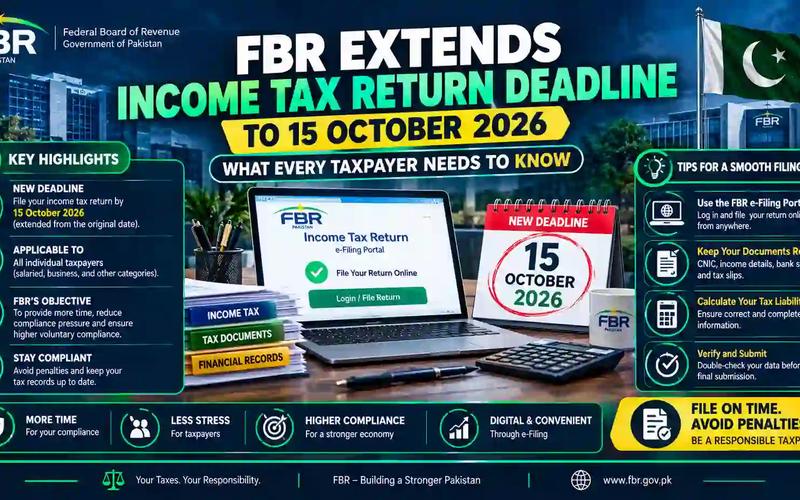
FBR typically sets September 30 as the standard deadline for salaried and business individuals to file returns for the preceding tax year, though extensions are common and announced closer to the date. Missing the deadline results in:
- Automatic removal from (or exclusion from) the Active Taxpayer List until the return is filed
- A penalty for late filing, calculated as a percentage of tax payable, subject to a minimum amount
- Continued exposure to higher non-filer withholding tax rates in the meantime
There's also a provision to appear on the ATL even after the deadline by paying a surcharge for late filing, which restores filer status faster than waiting for the next filing cycle.
Frequently Asked Questions
Is FBR registration free of cost? Yes. Registering for an NTN and creating an Iris account is completely free. You never need to pay anyone to register — be cautious of agents who charge unnecessary fees for basic registration.
How long does it take to become an active filer after registering? Registration on Iris is instant. But you only appear on the Active Taxpayer List after you file your tax return, which is usually reflected within one to two weeks of submission, once FBR updates the ATL (typically every Monday).
Can I register on FBR without a CNIC? No. A valid CNIC (or NICOP for overseas Pakistanis) is mandatory for individual registration. Businesses and companies require additional documents like SECP incorporation certificates.
Is NTN the same as filer status? No. Your NTN is simply your tax registration number — for individuals, it's the same as your CNIC. Filer status is only achieved once you've filed a return and appear on the ATL.
What happens if I don't file my tax return? You remain classified as a non-filer, pay higher withholding tax rates on banking, property, and vehicle transactions, and may face penalties or notices from FBR for non-compliance, especially if third-party data shows taxable income or assets under your name.
Can I file a nil return if I have no taxable income? Yes. If your income is below the taxable threshold, you can still file a "nil" return to maintain your filer status and gain access to lower withholding tax rates on transactions.
How do I check if I'm already a filer? Visit FBR's official Active Taxpayer List search tool, enter your CNIC or NTN, and it will confirm your current status instantly.
Can I edit my return after submitting it? Yes, through a "Revised Return" option on Iris, though revisions after the deadline may require approval depending on the nature of the change.
Final Thoughts
Becoming a tax filer in Pakistan in 2026 comes down to two simple stages: registering on Iris to get your NTN, and then actually filing your annual return to appear on the Active Taxpayer List. The registration itself takes less than 20 minutes if your documents are ready; the return filing takes longer only if your finances are complex.
Given how much filer status saves on everyday transactions — from vehicle registration to property transfers to simple bank withdrawals — it's one of the highest-value paperwork tasks most working Pakistanis can complete in a year. Start with registration on Iris, use our salary or income tax calculator to estimate what you owe beforehand, and file well before the deadline to avoid surcharges and delays in your ATL update.
What about freelancers?
Freelancers follow the same registration path (IRIS e-enrollment with CNIC) but their income is taxed as non-salary business income, and they pay advance tax in quarterly installments. If you export IT services through PSEB registration, your foreign-currency receipts may qualify for the flat 0.25% rate instead of the slabs — see the complete freelancer tax planning guide for details.
Important disclaimer
This article is for educational planning only. It does not provide professional tax, legal, accounting, payroll, customs, or financial advice. Tax rules can change and final results may depend on your personal facts. Always verify important tax decisions with official sources or a qualified professional.
About the author
This article was written by the Tax Calculators Team, the group behind TaxCalculators.tools. Learn more about our team and editorial process.
Last reviewed: July 2, 2026