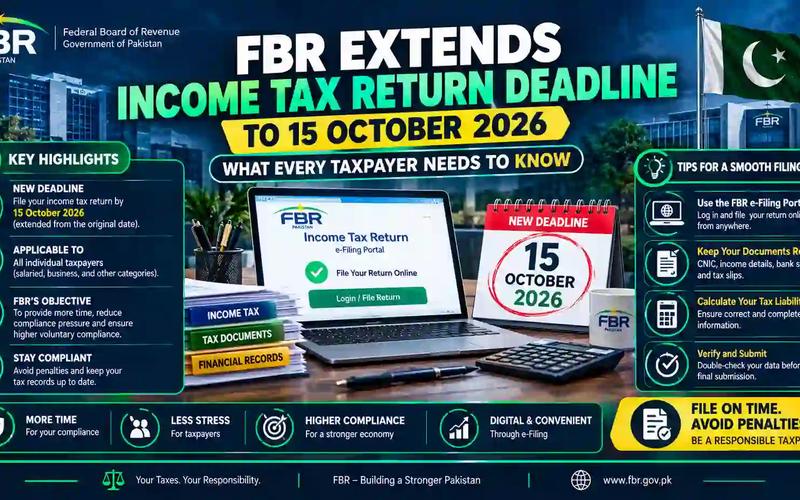
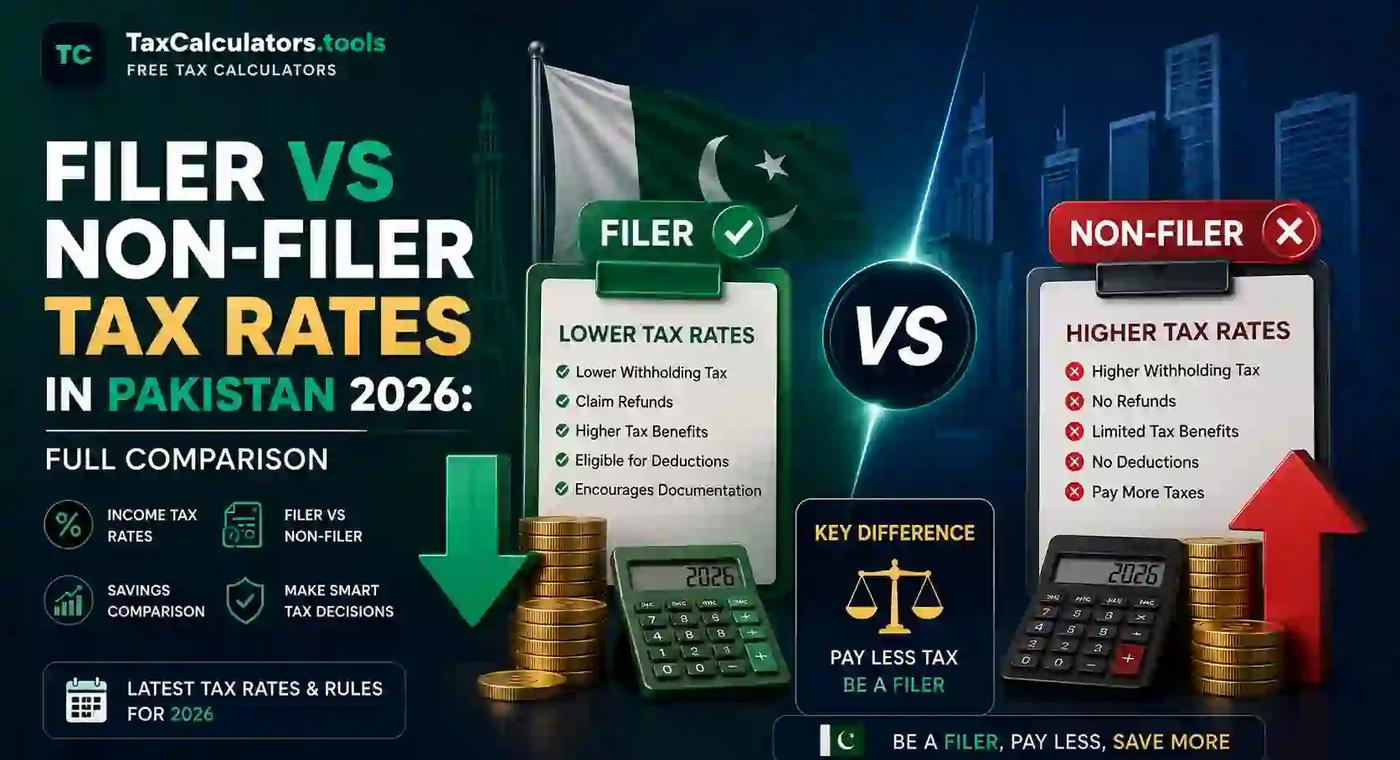
If you've ever wondered why your friend paid half the tax you did on the same property or the same bank withdrawal, the answer almost always comes down to one thing: filer status. In 2026, Pakistan's tax system has become sharper about rewarding people who file returns and punishing those who don't. This guide breaks down exactly what separates a filer from a non-filer, the real withholding tax rates on property, banking, vehicles, dividends, and salary, and the simplest way to check and fix your own status before your next big transaction. Whether you're buying a plot in DHA, withdrawing cash from your bank, or just tired of overpaying, this is the complete 2026 picture.
What Does Filer vs Non-Filer Actually Mean in Pakistan?
Pakistan's tax system runs on a simple enforcement idea: cooperate with FBR by filing your return, and you get lower tax rates almost everywhere money moves. Don't cooperate, and you pay significantly more, sometimes double or triple, on the exact same transaction.
Who Is a Filer?
A filer is a person, business, or Association of Persons (AOP) whose name appears on the FBR's Active Taxpayer List (ATL) because they submitted their annual income tax return on time. Under the Income Tax Ordinance 2001, a taxpayer is classified as an active filer if their return was submitted on time or even with a late filing fee known as the ATL surcharge. To qualify, you generally need three things in place: an NTN (National Tax Number) issued by FBR, a filed income tax return for the relevant tax year, and inclusion on the weekly-updated ATL.
Who Is a Non-Filer?
A non-filer is anyone who has not filed their return or does not appear on the ATL, and as a result pays higher withholding tax rates on key transactions. This applies regardless of how much someone earns — even high-income individuals are treated as non-filers if they simply haven't submitted a return. Banks and other institutions check your CNIC or NTN against the ATL database at the time of each deduction, not just once a year, so your status can shift mid-year if you file late or drop off the list.
The Late Filer Category (The New Middle Tier)
Since recent Finance Acts, Pakistan's system has worked with three statuses instead of a simple binary. These are people who file tax returns, but after the official September 30 deadline, and they fall into an intermediate tier where tax is higher than an active filer's but lower than a complete non-filer's. Technically you are still a filer, but because you filed late, FBR penalizes you with a rate that sits between the active filer and non-filer brackets — and you can fix it by paying an ATL surcharge to restore active status.
Worth flagging for 2026 specifically: the Finance Act 2026 removed the old concession that gave late filers a permanent middle rate on several sections, so the gap between filer and non-filer rates has effectively widened in some categories this year.
Why Filer Status Matters More in 2026 Than Ever Before
A few years ago, staying a non-filer was mostly an inconvenience. In 2026, it's an expensive one. With increased digitization of financial records and tighter inter-agency data sharing between FBR, NADRA, and banking institutions, non-filers are finding it harder to avoid detection and the resulting financial penalties.
This matters because withholding tax is Pakistan's main enforcement tool — instead of chasing people down after the fact, the tax is simply deducted at source, higher for non-filers, at almost every point money changes hands: property registries, bank counters, vehicle registration offices, and dividend payouts.
Filer vs Non-Filer Tax Rates 2026: Full Comparison
Here's the rate breakdown across the transactions that affect most people. Because FBR periodically issues clarifying SROs, treat these as the commonly reported 2026 framework and always cross-check the exact figure on fbr.gov.pk or with a tax consultant before a large transaction.
Property Purchase and Sale Tax (Sections 236C & 236K)
Real estate is where the filer-vs-non-filer gap hits hardest simply because property values are large.
On property purchase, filers pay advance tax of around 3%, late filers pay roughly 6%, and non-filers pay up to 10–12% depending on transaction value — the rate differs significantly based on filer status, with active filers paying 3%, late filers paying 6%, and non-filers paying 10% as advance tax on property sales.
For someone buying a property worth Rs. 1 crore, the advance tax difference between a filer and a non-filer alone can exceed Rs. 9 lakh. On bigger commercial deals, the gap multiplies fast. A non-filer buying a 10 crore commercial plot can end up paying roughly PKR 1.6 crore more in taxes than a filer would on the identical transaction.
Section 236K applies to the buyer at the time of transfer, and Section 236C applies to the seller. If you want the full mechanics of how these two sections interact, our guide on withholding tax on property transactions in Pakistan walks through worked examples, and you can run your own numbers instantly with the property tax calculator.
Bank Withholding Tax (Section 151 and Section 231AB)
Banking is the second-biggest area where filer status changes your bottom line.
For tax year 2026, bank profit withholding tax sits at 15% for filers and 30% for non-filers under Section 151, while cash withdrawal tax under Section 231AB applies at 0.8% for non-filers on amounts exceeding the specified threshold. Some practitioner sources put the non-filer bank-interest rate as high as 35%, so this is one figure worth confirming directly with your bank or FBR before you rely on it for planning.
Filers pay significantly lower withholding tax on cash withdrawals from banks compared to non-filers, and the FBR can instruct banks to deduct higher withholding tax on both cash withdrawals and credit interest for non-filers. You can model both scenarios with the withholding tax calculator.
Vehicle Registration and Token Tax
Vehicles follow the same logic, but the multiplier is steeper. The general rule under the Tenth Schedule of the Income Tax Ordinance is that non-filer rates equal the filer rate plus 100%, effectively doubling most withholding rates, with vehicle-related sections tripled instead of doubled. That means a non-filer registering a new car can end up paying roughly three times the token and registration tax a filer pays on the identical vehicle. If you're transferring or registering a car this year, the vehicle token tax calculator is the fastest way to see both numbers side by side before you visit the excise office.
Dividend and Prize Bond Tax
Comparing filer and non-filer withholding tax rates: property purchase tax runs 3% versus 10%, bank interest runs 15% versus 35%, and prize bond winnings run 15% versus 30%.
Dividend income carries a similar filer-favored structure — filers are taxed at the standard concessional rate, while non-filers face a materially higher deduction at source, with no easy adjustment unless a return is eventually filed.
Salary Tax Slabs for Tax Year 2026-27
Filer status doesn't just affect one-off transactions — it interacts with your ongoing salary tax too, since the return you file to stay "active" is built on this income.
Salary tax slabs under Section 149 were revised for Tax Year 2026-27: the top 35% rate now begins at Rs. 7 million of annual taxable income instead of the earlier Rs. 4.1 million threshold, and the additional 9% surcharge on very high earners was removed. For a full slab-by-slab breakdown with worked examples, see our Pakistan salary tax slabs breakdown and the wider FBR tax slabs 2026-27 updates, or run your own numbers on the salary tax calculator.
Real-World Example: How Much More Does a Non-Filer Actually Pay?
Numbers make this concrete faster than percentages alone. Take Mr. Ali, who is buying a plot worth PKR 6 crore.
- As an active filer paying roughly 3% advance tax under Section 236K, his tax bill on this purchase is about PKR 18 lakh.
- As a late filer paying around 6%, that bill roughly doubles to PKR 36 lakh.
- As a non-filer paying up to 10–12%, he could owe anywhere from PKR 60 lakh to over 70 lakh on the same plot.
That tax is technically adjustable and refundable when he files his annual return, but he still has to pay it upfront to close the deal. In practice, that upfront cash-flow hit is often the real reason people postpone purchases — or finally register with FBR.
Now scale this logic down to everyday life: a Rs. 500,000 bank profit payout taxed at 15% costs a filer Rs. 75,000. The same payout taxed at 30% costs a non-filer Rs. 150,000 — an extra Rs. 75,000 lost purely for not being on the ATL.
How to Check Your Filer Status in Pakistan (2026)
Before you plan any large purchase, confirm exactly where you stand. There are two fast, official ways to do it.
- Via the FBR website: Visit fbr.gov.pk, open the Online Verification Portal, select "ATL (Income Tax)," and enter your CNIC or NTN. You can also visit fbr.gov.pk directly and use the same Online Verification Portal to see your current status instantly.
- Via SMS: Send your 13-digit CNIC to 9966 for an instant ATL status check — this is the quickest option if you're not near a computer.
Because the FBR updates the Active Taxpayer List every Sunday, your status can genuinely change week to week, so it's worth re-checking close to the date of any major transaction rather than relying on a check from a month ago. For a deeper walkthrough of reading and interpreting your ATL entry, see how to check your FBR Active Taxpayer List status.
How to Become a Filer in Pakistan: Step-by-Step
Becoming a filer is more paperwork than complexity. Here's the practical sequence:
- Register for an NTN through the FBR IRIS portal using your CNIC, mobile number, and email.
- Create your IRIS login at iris.fbr.gov.pk — this is the official portal for both registration and return filing.
- Gather your documents: salary certificate or business income proof, bank statements, and details of any assets (property, vehicles, investments).
- File your income tax return for the relevant tax year through IRIS, declaring income, assets, and any tax already withheld at source.
- Confirm ATL inclusion a few days after filing by checking your status via the SMS or web method above.
If you filed late, you'll need to pay the ATL surcharge to move from "inactive" to "active" status on the list. For the full IRIS walkthrough with screenshots-level detail, our FBR IRIS portal guide for 2026-27 and the dedicated how to become a tax filer in Pakistan article cover every step in order.
The ATL Surcharge and the Late Filer Trap
The late filer category exists precisely because FBR wants to reward promptness, not just eventual compliance. If you miss the September 30 deadline, you don't automatically become a non-filer — but you do fall into the penalized middle tier until you pay the surcharge.
Late filers can get their name re-included on the active taxpayer list by visiting FBR's IRIS Portal and paying that specific penalty or additional fee. The surcharge amount is modest compared to the withholding tax savings it unlocks — for most people, paying it is far cheaper than absorbing non-filer or even late-filer rates on their next property or bank transaction. Once it's paid and processed, your name typically moves back to "Active" on the following Sunday's ATL update.
Filer vs Non-Filer: Location-Specific Considerations
Withholding tax rates under the federal Income Tax Ordinance apply uniformly across Pakistan, but a few practical differences show up depending on where you're transacting:
- Islamabad and Rawalpindi: Property transfers routed through the Capital Development Authority (CDA) and cantonment boards still apply the same 236C/236K rates, but processing at FBR's Islamabad Regional Tax Office can take longer during peak filing season.
- Lahore and Punjab: In addition to federal withholding tax, Punjab's Excise and Taxation Department applies its own token tax on vehicles, which stacks on top of the filer/non-filer withholding difference — see our Punjab vehicle verification and token tax guide for the combined picture.
- Karachi and Sindh: Property transactions in high-value societies like DHA Karachi see some of the largest absolute rupee gaps between filers and non-filers simply because per-square-yard valuations are higher.
- DHA developments generally (Lahore, Karachi, Islamabad): Because these are high-value, high-turnover markets, the percentage-point difference between filer and non-filer rates translates into some of the largest cash differences anywhere in the country.
Overseas Pakistanis and Filer Status
If you live abroad, you're not automatically exempt from this system, but you do have a legitimate shortcut. Overseas Pakistanis can pay tax at filer rates without filing a full return if they route investments through a Roshan Digital Account, since RDA transactions are treated as full and final tax payments. This makes RDA a practical option for expatriates who want filer-level property or investment tax rates without navigating the complete IRIS filing process from outside the country. For a broader comparison of how Pakistan's system stacks up against filing obligations elsewhere, see Pakistan vs US tax system: a guide for expats.
Why Use a Tax Calculator Before You File or Transact
Reading percentage rates is one thing; knowing your exact rupee liability before you commit to a property deal, a car purchase, or a large withdrawal is another. This is exactly why free, updated tax calculators matter in 2026 — rates change with almost every Finance Act, and manual calculation invites costly mistakes.
Our FBR tax calculator and advance tax calculator are updated directly against current FBR rates, so you can compare your filer and non-filer liability side by side in seconds, before you're standing at a bank counter or a sub-registrar's office. If you'd like to understand exactly how our figures are kept current and verified, our page on online tax calculator accuracy and methodology explains the process in full.
Common Mistakes People Make With Filer Status
A few patterns come up again and again:
- Assuming NTN registration alone makes you a filer. Having an NTN just means you're registered — you're only a filer once you've actually filed a return and appear on the ATL.
- Filing once and forgetting the next year. Because the ATL updates weekly and resets each tax year, a single past filing doesn't keep you active indefinitely.
- Ignoring the late filer surcharge. Some people assume filing late has no consequence beyond the deadline itself, when in fact it triggers a distinct, higher rate until the surcharge is paid.
- Not checking status right before a transaction. Since the ATL refreshes every Sunday, a status check from a few weeks ago may no longer be accurate.
- Confusing NTN with STRN or SECP registration. These are separate registrations for separate purposes — income tax filing, sales tax, and company incorporation respectively — and mixing them up causes unnecessary delays.
FAQs: Filer vs Non-Filer Tax Rates in Pakistan 2026
What is a filer in Pakistan? A filer is a person or business whose name appears on FBR's Active Taxpayer List because they filed their income tax return by the deadline, entitling them to the lowest withholding tax rates on property, banking, and vehicle transactions.
What is a non-filer in Pakistan? A non-filer is anyone who hasn't filed a return or doesn't appear on the ATL, regardless of income level, and who consequently pays significantly higher withholding tax — often double or triple — on the same transactions filers pay less for.
How do I check my filer status in Pakistan? Send your CNIC to 9966 via SMS for an instant check, or visit fbr.gov.pk's Online Verification Portal and search the ATL using your CNIC or NTN.
What is the ATL surcharge? It's a penalty fee paid through the FBR IRIS portal that restores a late filer's name to the active taxpayer list, unlocking lower filer-level withholding tax rates going forward.
Can a non-filer buy property or a vehicle in Pakistan? Yes — non-filers can still complete these purchases, but they pay substantially higher advance tax rates, typically 3–4 times more than filers on property and up to triple on vehicle registration.
Does filer status affect my salary tax? Filer status itself doesn't change your salary tax slab, but filing your return is what keeps you on the ATL, which in turn determines the withholding rate you pay on every other transaction throughout the year.
Conclusion: Filing Isn't Just Compliance — It's the Cheapest Tax Decision You'll Make
The gap between filer and non-filer tax rates in Pakistan has only widened under the Finance Act 2026 — sometimes by tens of lakhs on a single property deal, and by thousands of rupees every time you touch your own bank account. Filing a return isn't paperwork for its own sake; it's the single most cost-effective financial decision available to almost anyone earning or transacting in Pakistan today.
Before your next property purchase, vehicle registration, or large bank transaction, take five minutes to check your ATL status and run the numbers through our FBR tax calculator or property tax calculator. Seeing the exact rupee difference between filer and non-filer rates for your specific transaction is usually all the motivation anyone needs to get registered before the next ATL update.
Important disclaimer
This article is for educational planning only. It does not provide professional tax, legal, accounting, payroll, customs, or financial advice. Tax rules can change and final results may depend on your personal facts. Always verify important tax decisions with official sources or a qualified professional.