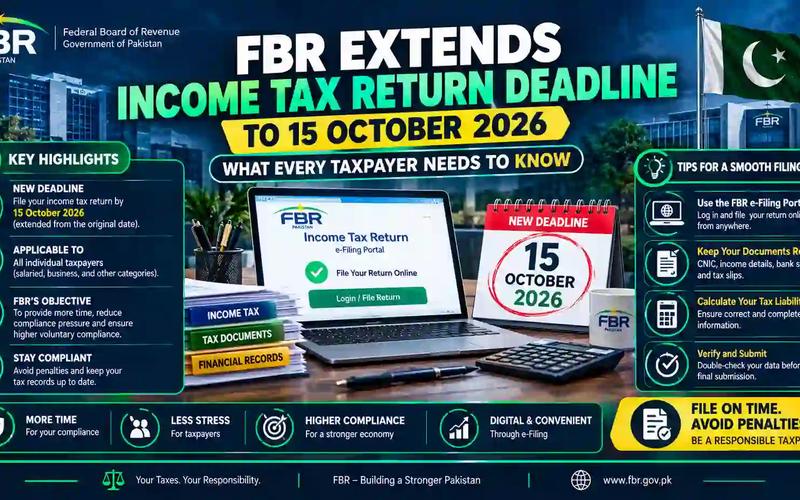

TL;DR: Income tax on salary in Pakistan is calculated on annual taxable income using progressive FBR slabs. For FY 2026-27, income up to Rs. 600,000 is tax-free; the next band (Rs. 600,001–1,200,000) is taxed at 1%. A monthly salary of Rs. 150,000 (Rs. 1,800,000 a year) pays about Rs. 72,000 per year, or Rs. 6,000 per month. Use the free income tax calculator to get your exact estimate.
Is salary income taxed differently from other income in Pakistan?
Yes. Salary income uses the salaried FBR slab table, which runs from 0% to 35%, while business and other non-salary income uses a separate table with higher rates of up to 45%. Both tables exempt the first Rs. 600,000 of annual income, but above that the rates diverge, so the income type matters for your estimate.
This guide is about income tax as it applies to salary — the tax you owe on employment income, which your employer usually deducts at source each month. Finance Act 2026 introduced reduced salaried rates for FY 2026-27 (effective July 1, 2026): the old 23%, 30%, and 35% steps were replaced with 20%, 25%, 29%, 32%, and 35% across restructured bands.
How is income tax on salary calculated in Pakistan?
Income tax on salary is calculated on your annual taxable income: multiply monthly salary by 12, add taxable bonus and other income, subtract eligible deductions, then apply the FBR salary slab to the total.
- Calculate annual salary (monthly salary × 12).
- Add taxable bonus and other taxable income.
- Subtract eligible deductions (e.g., approved pension fund contributions, zakat).
- Match the result to the salary slab table.
- Apply the slab formula, then divide by 12 for the monthly deduction.
FBR salary slabs FY 2026-27 (Tax Year 2027)
| Annual Income | Tax Rate |
|---|---|
| Up to Rs. 600,000 | 0% |
| Rs. 600,001 – Rs. 1,200,000 | 1% of amount exceeding Rs. 600,000 |
| Rs. 1,200,001 – Rs. 2,200,000 | Rs. 6,000 + 11% of amount exceeding Rs. 1,200,000 |
| Rs. 2,200,001 – Rs. 3,200,000 | Rs. 116,000 + 20% of amount exceeding Rs. 2,200,000 |
| Rs. 3,200,001 – Rs. 4,100,000 | Rs. 316,000 + 25% of amount exceeding Rs. 3,200,000 |
| Rs. 4,100,001 – Rs. 5,600,000 | Rs. 541,000 + 29% of amount exceeding Rs. 4,100,000 |
| Rs. 5,600,001 – Rs. 7,000,000 | Rs. 976,000 + 32% of amount exceeding Rs. 5,600,000 |
| Above Rs. 7,000,000 | Rs. 1,424,000 + 35% of amount exceeding Rs. 7,000,000 |
Figures reflect the Finance Bill 2026, First Schedule (effective July 1, 2026). Confirm the final notified FBR SRO before filing.
Worked example: income tax on a Rs. 150,000 monthly salary
On a salary of Rs. 150,000 per month (Rs. 1,800,000 per year), income tax is Rs. 72,000 per year, or Rs. 6,000 per month: Rs. 6,000 base tax plus 11% of the Rs. 600,000 above the Rs. 1,200,000 threshold.
For a Rs. 100,000 monthly salary (Rs. 1,200,000 a year), the tax is Rs. 6,000 per year, or Rs. 500 per month, because the income sits in the Rs. 600,001–1,200,000 band taxed at 1%. Salaries up to Rs. 50,000 a month (Rs. 600,000 a year) pay zero income tax.
Gross salary vs taxable income — what the calculator actually taxes
The tax slabs apply to taxable income, not gross salary. Gross salary is your pay before tax and deductions; taxable income is what remains after eligible deductions and after adding taxable bonuses.
The free Pakistan income tax calculator handles both salary and non-salary income, applies the correct slab automatically, and shows monthly tax, surcharge, and net income.
What is the minimum taxable income in Pakistan for 2026-27?
Rs. 600,000 per year, or Rs. 50,000 per month. The tax-free threshold stays at Rs. 600,000 for FY 2026-27, unchanged from the previous year.
Related guides
- Pakistan Salary Tax Calculator: Step-by-Step Guide for Salaried Employees
- FBR Tax Slabs 2026-27: What's New for the Upcoming Tax Year
- Salary Tax vs Income Tax in Pakistan: What's the Difference?
Important disclaimer
This article is for educational planning only. It does not provide professional tax, legal, accounting, payroll, customs, or financial advice. Tax rules can change and final results may depend on your personal facts. Always verify important tax decisions with official sources or a qualified professional.